
Soho pilates studio owner talks about Pilates and injury

Here is an article Stacy from zeel.com wrote.

There’s no doubt that shaping up after a big fall can be tough. That’s one of the reasons why Pilates can be so incredibly useful, says Zeel expert and NYC studio owner Halle Clarke.

When it comes to rehabilitation (whether due to injury or to years of inactivity), it’s not just about getting back to a place of physical fitness; it’s equally important for your muscles to relearn certain movements that may have become inhibited over time. Pilates does just that, and can be applied as both an exercise and a neuromuscular re-patterning technique. Halle explains what you need to know.

Compensation patterns. Imagine this. If you hurt your left leg, naturally, you’ll start placing more weight on your right leg to compensate for the injured limb. As you begin to heal, you continue to place added pressure on the right leg because your muscles have become accustomed to functioning in a new manner—even if it’s a less efficient one. In the end, that added weight can cause a domino effect of discomfort and injuries. Pilates offers a gentle way to prevent or reverse these patterns.

Time heals all wounds. If a muscle becomes severely strained, you may need a few weeks to allow your body to heal, depending on the nature of the injury, before you can really take the muscle through its full range of motion. Yet this rest period can turn into a real balancing act. The longer you wait to start moving again, the more likely it is that your body will begin to create patterns of compensation. Pilates may be gentle enough to reintroduce movement to the muscle without exacerbating the injury.

Muscular re-patterning. When injured or de-conditioned, muscles essentially suffer memory loss, as noted by the example above. Some muscles will begin to contract too quickly, some too slowly, and some not at all. Pilates can re-pattern the muscles. Through this re-education process, it’s possible to instruct the muscles when to become active and fire, when to contract, and how to do it.

A friendly reminder. As you now know, without re-patterning, your muscles can develop compensated habits. Ultimately, this causes them to work inefficiently, leading to all sorts of physical aches and ailments. Proper movement doesn’t reinstate itself. Rather, your muscles need to be reminded of what it feels like to engage in healthier, more efficient patterns – which Pilates is perfect for. Many pain issues can be resolved by coordinating muscle movement in this manner.

www.mongoosebodyworks.com

Pilates in Soho, NYC

Posted in Uncategorized | Leave a comment

Is Pilates for all ages?

That depends on what kind of Pilates is being taught.  A private session with an instructor who graduated from a comprehensive program has been fully trained to work with all age
groups and a variety of conditions. In this setting any age group could benefit
from Pilates.  A group mat class (like the ones taught at gyms) may not be appropriate for all ages. For example if the class is taught with traditional exercises, many of these exercises are contraindicated for osteopenia and osteoporosis. Since a large number of post menopausal women are unknowingly walking around with some degree of bone loss this kind of Pilates class would not be appropriate. At my Pilates studio in soho nyc  we see clients from the age of 12 to 78!

Mongoose Bodyworks

www.mongoosebodyworks.com

downtown NYC 10012

Posted in Uncategorized | Leave a comment

Can Pilates make me taller?

Can Pilates make me taller?

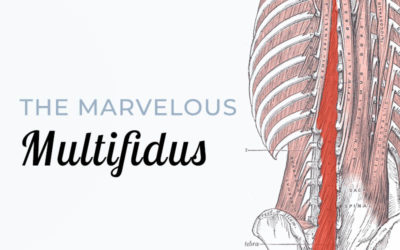
Actually yes it can! When the core is trained correctly the client is taught how to engage the three muscles of the inner unit: the multifidi, the tranverse and the pelvic floor. The Transverse wraps around the belly and acts like a natural corset that can expand and contract as needed. The Multifidi are relatively small muscles that lye to either side of the spinous processes ( the bumps that you feel along your spine). When these muscles contract simultaneously the internal pressure that is created causes the spine to lengthen, similar to the way the contents of a tube of toothpaste will squeeze out when pressure is applied. This action does in fact make you taller!

Halle Clarke

Mongoose Bodyworks

Pilates in Soho NYC

Posted in Uncategorized | Leave a comment

Pilates for Beginners in NYC

Contrary to popular belief Pilates can be done by virtually anyone and does not require experience in yoga, dance or any other movement technique. So yes, Pilates is great for beginners. Although this option can be less expensive I do NOT recommend starting in a group class, whether it be on the Reformer or the Mat. The best way to learn the technique is to start with 1-3 privates. An introductory Private will include work on both the Mat and the Reformer. Then if finances permit, move to a small group class preferably on the reformer. Once you feel proficient at that then a group mat class would be appropriate. When students jump into a Mat class without any previous Pilates experience they often miss the nuance of the method, and don’t get the same benefits. The initial investment is worth it. At Mongoose Bodyworks in Soho NYC we offer a 3 pack of privates at a discounted price for new clients. This encourages new clients to start our their Pilates training with a one-on-one expereince.

Posted in Uncategorized | Leave a comment

Pilates and Pregnancy

Most women who maintain regular exercise regimens tend to voice the same concerns about fitness—whether they’re pregnant or not. How can I tone my arms? How can I avoid injury? and Should I get a personal trainer? are universal queries; and in reality, it’s the answers, not the questions, which differ when a woman decides to work out while pregnant.

Halle Clarke, a Pilates expert and the owner of Mongoose Bodyworks in Soho NYC, knows what women need and responds to these same types of questions on a regular basis. Eager to educate others, Halle was kind enough to contribute to our Ask the Expert series and impart some of her infinite wisdom on Pilates for a healthy pregnancy to you, our inquisitive Zeel readers.

What are the benefits of practicing Pilates throughout pregnancy?

As a form of exercise, Pilates has an inimitable ability to strengthen the pelvic floor, including the transverse abdominis and the lumbar multifidus. This “inner unit” of core muscles (and other muscles too) are placed under an incredible amount of strain for many months, so the more awareness a woman can have of her inner core, the more pain-free the pregnancy can be.

What should women who are pregnant think about during Pilates?

Women (all women!) should consider a basic Pilates principle: Every movement begins with a very gentle sense of support from the core. The reason why I stress “gentle” is because, if a woman overdoes abdominal work while pregnant, she can actually create a diastasis, or abdominal separation. There’s a fine line between gentle and not gentle, and it’s important to avoid overloading the abdominals to the point that they work against the body.

How important is personal Pilates instruction for pregnant women?

Because a woman’s body is changing so quickly, I do think tha instruction is really important. The ways in which they should move their body one month is going to be different the next month. To help her make that transition, she probably needs an outside eye to guide and making changes to each movement.

Of course, not everyone can afford to work with a personal instructor twice a week. But it would be a tremendous help to schedule a session twice a month to discuss what types of adaptations should be made as the body continues to change.

What positions require adjustments throughout the pregnancy?

Certainly by the fourth month, it’s no longer comfortable to lie on the stomach. Around that time, inversions may no longer be ideal as well, which in Pilates includes short spine and corkscrew.

Toward the fifth and sixth months, when the hormone relaxin starts to percolate, splits and straddles can over-mobilize the pelvis and be unsafe. The intention should be to prepare the muscles for labor, not to hyper-mobilize the muscles in the lower back and hips. The SI joints can become hyper-mobile during this time too, though a personal Pilates instructor can help to maintain this stability.

Posted in Uncategorized | Leave a comment

Can Pilates help Sciatica?

Yes, Pilates can help sciatica. At Mongoose Bodyworks we have successfully helped clients with sciatica many times. If the symptoms are due to a disc injury then the client is taught how to stabilize the lower lumbar spine so as to not continually aggravate the nerve as is exits the spine. If the sciatica is due to a tight piriformis and surrounding muscle tissue than we gently stretch the area and re-teach the hip to not over activate the piriformis which can clamp down on the sciatic nerve and cause discomfort.

Mongoose Bodyworks

Soho, NYC, 10012

Posted in Uncategorized | Leave a comment

Pilates and injury prevention

When most people think of injuries, they’re wondering how to recover after incurring one. What’s less common is to take the initiative to perform those activities that actually prevent injuries from occurring in the first place.

Halle Clarke, a highly respected Pilates instructor in New York City and zeel expert is no stranger to injury. A former dancer, Halle has experienced and recovered from multiple injuries throughout her career, lending to her current fascination with anatomy, muscle coordination, neuromuscular re-patterning and all that scientific jazz.

At Mongoose Bodyworks, her private Soho -based studio in downtown NYC, Halle doesn’t merely help clients recover from injury; she goes one step further, equipping them with the right tools to avoid future injuries too. Here’s how Pilates can be integral in doing so.

Increased body awareness. Pilates enhances an individual’s sense of alignment and body awareness. There’s a constant intention throughout the practice to create physical awareness, and that awareness teaches a person to move with greater ease, to sit more efficiently and to develop patterns that require less muscular strain. By increasing body awareness, you ultimately create less discomfort in daily life.

Balancing muscles and joints. In a technical way, Pilates aims to balance the muscles around the joints so that one muscle group doesn’t dominate over another. For example, a person that spends all day sitting at a desk will tend to develop short, tight and possibly weak hip flexors. This alone puts a lot of strain on the hip sockets and low back.

In this case, a Pilates teacher wouldn’t only do the obvious, which is to stretch the hip flexors, but they would also focus on how to teach the client to properly engage other muscles in the hip, like the posterior hip, glutes and hamstring, to balance this habitual shortening of the hip flexors. That’s one of the key elements that helps with injury prevention.

Simple home remedies. The lessons don’t end once you leave Halle’s studio. She gives us DIY home remedies for injury prevention that can be utilized after and in between sessions. First, be sure to take breaks from sitting. Next, make sure that you engage in stretches that target the hip flexors. And finally, perform simple exercises for the glutes and hamstrings daily to continually reinforce these injury-prone regions.

Mongoose Bodyworks

594 Braodway, Suite 904

Soho, NYC, 10012


Posted in New York Pilates | Leave a comment

Pilates and low back pain


Are there massages or exercises that can strengthen lower back muscles and prevent lumbar strain?

Halle on Dec 13, 2011
Yes, there are Pilates exercises that strengthen the lower back and there are  Pilates exercises that may prevent lumbar strain. These are not necessarily the same exercises.

When directly strengthening the back with exercises like the cobra (in yoga), prone leg lifts, or plank position, the most important tip is to make sure that the back isn’t going into hyperextension.

Hyperextension (extreme arching) does contract the back muscles concentrically but may also create compression, pain and irritation in the lumbar spine.

Exercises that prevent lumbar strain could be drawn from a large pool of Pilates exercises that aim to stabilize the spine so that the lumbar spine is not doing all the work, such as abdominal, leg, and upper back exercises. Of course if the lumbar strain is due to spine pathology such as stenosis or disc injury then additional contraindications would apply.

To conclude, there is never one exercise that prevents back strain because the causes are too variable.
Halle Clarke, NYC

Mongoosebodyworks.com


Posted in Uncategorized | Leave a comment

Pilates and Pregnancy

Most women who maintain regular exercise regimens tend to voice the same concerns about fitness—whether they’re pregnant or not. How can I tone my arms? How can I avoid injury? and Should I get a personal trainer? are universal queries; and in reality, it’s the answers, not the questions, which differ when a woman decides to work out while pregnant.

Halle Clarke, a Pilates expert and the owner of Mongoose Bodyworks in Soho NYC, knows what women need and responds to these same types of questions on a regular basis. Eager to educate others, Halle was kind enough to contribute to our Ask the Expert series and impart some of her infinite wisdom on Pilates for a healthy pregnancy to you, our inquisitive Zeel readers.

What are the benefits of practicing Pilates throughout pregnancy?

As a form of exercise, Pilates has an inimitable ability to strengthen the pelvic floor, including the transverse abdominis and the lumbar multifidus. This “inner unit” of core muscles (and other muscles too) are placed under an incredible amount of strain for many months, so the more awareness a woman can have of her inner core, the more pain-free the pregnancy can be.

What should women who are pregnant think about during Pilates?

Women (all women!) should consider a basic Pilates principle: Every movement begins with a very gentle sense of support from the core. The reason why I stress “gentle” is because, if a woman overdoes abdominal work while pregnant, she can actually create a diastasis, or abdominal separation. There’s a fine line between gentle and not gentle, and it’s important to avoid overloading the abdominals to the point that they work against the body.

How important is personal Pilates instruction for pregnant women?

Because a woman’s body is changing so quickly, I do think that private instruction is really important. The ways in which they should move their body one month is going to be different the next month. To help her make that transition, she probably needs an outside eye to guide and making changes to each movement.

Of course, not everyone can afford to work with a personal instructor twice a week. But it would be a tremendous help to schedule a session twice a month to discuss what types of adaptations should be made as the body continues to change.

What positions require adjustments throughout the pregnancy?

Certainly by the fourth month, it’s no longer comfortable to lie on the stomach. Around that time, inversions may no longer be ideal as well, which in Pilates includes short spine and corkscrew.

Toward the fifth and sixth months, when the hormone relaxin starts to percolate, splits and straddles can over-mobilize the pelvis and be unsafe. The intention should be to prepare the muscles for labor, not to hyper-mobilize the muscles in the lower back and hips. The SI joints can become hyper-mobile during this time too, though a personal Pilates instructor can help to maintain this stability.

Interview by Stacy at Zeel

Posted in Uncategorized | Leave a comment

Pilates in Soho is not all the Same

It’s important to stay in shape. We all know that; most of us value our health, and understand that exercise is a vital way to keep ourselves going. Pilates, which offers a low-impact, easy way to stay in shape, is a fantastic option—we know that, too. The increasing popularity of Pilates, though, has led to a significant rise in the number of classes available. The challenge now isn’t finding Pilates in Soho, it’s how to choose the right class.

As with any workout, the experience of your instructors and the size of the classes make an enormous difference. Obviously, you want your teachers to know what they’re doing. What use is experience, though, if you’re in a class so big you can’t get the attention you need? Pilates is meant to be a comprehensive workout, leaving you refreshed and energized even as you get fit. Clearly, then, it’s important to have an experience that leaves you satisfied.

Mongoose Bodyworks, which offers Pilates in Soho NYC, have you covered. Instructors at Mongoose boast years of experience and an understanding of the most basic goal of Pilates—your mental and physical health—that ensures you get what you need from your experience. Classes are offered in three sizes: single, making you the absolute center of attention; “duet,” which gives you the option of bringing a friend, while still getting quality one-on-one instructor time; and small group, which provides community atmosphere without getting lost in the crowd. Instructors at Mongoose have studied Pilates, yoga, anatomy, and massage to make sure that you get the best workout you possibly can.

If you’re looking to get in shape, Pilates is a great option. Low-impact workouts (especially for those with neck or back pain) help you look and feel better without grueling over-exertion. Like any workout program, though, not all Pilates studios offer the same programs, or the same experience. Mongoose Bodyworks wants you to feel your best: and their classes help you achieve that goal with qualified instructors, one-on-one attention, and genuine focus on enjoying your workout.

Mongoose Bodyworks

594 Broadway, Suite 904

Soho, NYC,10012

Posted in Pilates Manhattan | Tagged , | Leave a comment